Today's Featured Research

In a 2026 article published in the Journal of the American Pharmacists Association, McGivney and colleagues describe the development, implementation, and growth of the Pennsylvania Pharmacists Care Network (PPCN), a clinically integrated network of community pharmacies. Their report focuses on how pharmacists, schools of pharmacy, professional associations, technology partners, and health plans worked together to make patient care services more consistent and financially sustainable.
Between September 2017 and December 2025, pharmacists documented 198,626 patient encounters through seven payer programs included in the study. The findings describe an operational model for delivering and reimbursing pharmacist-provided services, rather than a clinical trial measuring changes in patient health outcomes.
Why Was the Network Created?
Community pharmacists have long supported patients through medication reviews, adherence counseling, and chronic disease care. Yet many of these encounters historically occurred alongside prescription dispensing without a consistent way to receive payment for the care itself. The authors identify limited time and inadequate compensation as major barriers to broadening these services.
To address those barriers, partners in Pennsylvania established PPCN to bring community pharmacies together around common service standards and payer contracts. PPCN is affiliated with CPESN USA, which provides national infrastructure and contracting support. Participating pharmacies are expected to offer core patient care services and document care using the Pharmacists eCare Plan (PeCP) standard.
How Did the Model Work?
PPCN coordinates with health plans to establish programs covering services such as comprehensive medication management, medication synchronization, adherence packaging, medication reconciliation, vaccination-related services, and chronic disease monitoring. Contracts use fee-for-service arrangements, value-based components, or both, depending on the program.
Training and documentation are central to this approach. The network provides program-specific training, collects structured electronic care records, reviews performance data, and shares feedback with pharmacies and payers. The study describes these activities as essential to consistent service delivery, quality improvement, and ongoing reimbursement.
What Did the Network Achieve?
In the seven payer programs analyzed, patient encounters grew over time. More detailed electronic care-plan data available for 2021–2025 identified 200 participating pharmacies, 25,371 unique patients, and 269,796 reimbursable patient care services. Patient encounters and service counts are different measures: one encounter may involve more than one documented service.
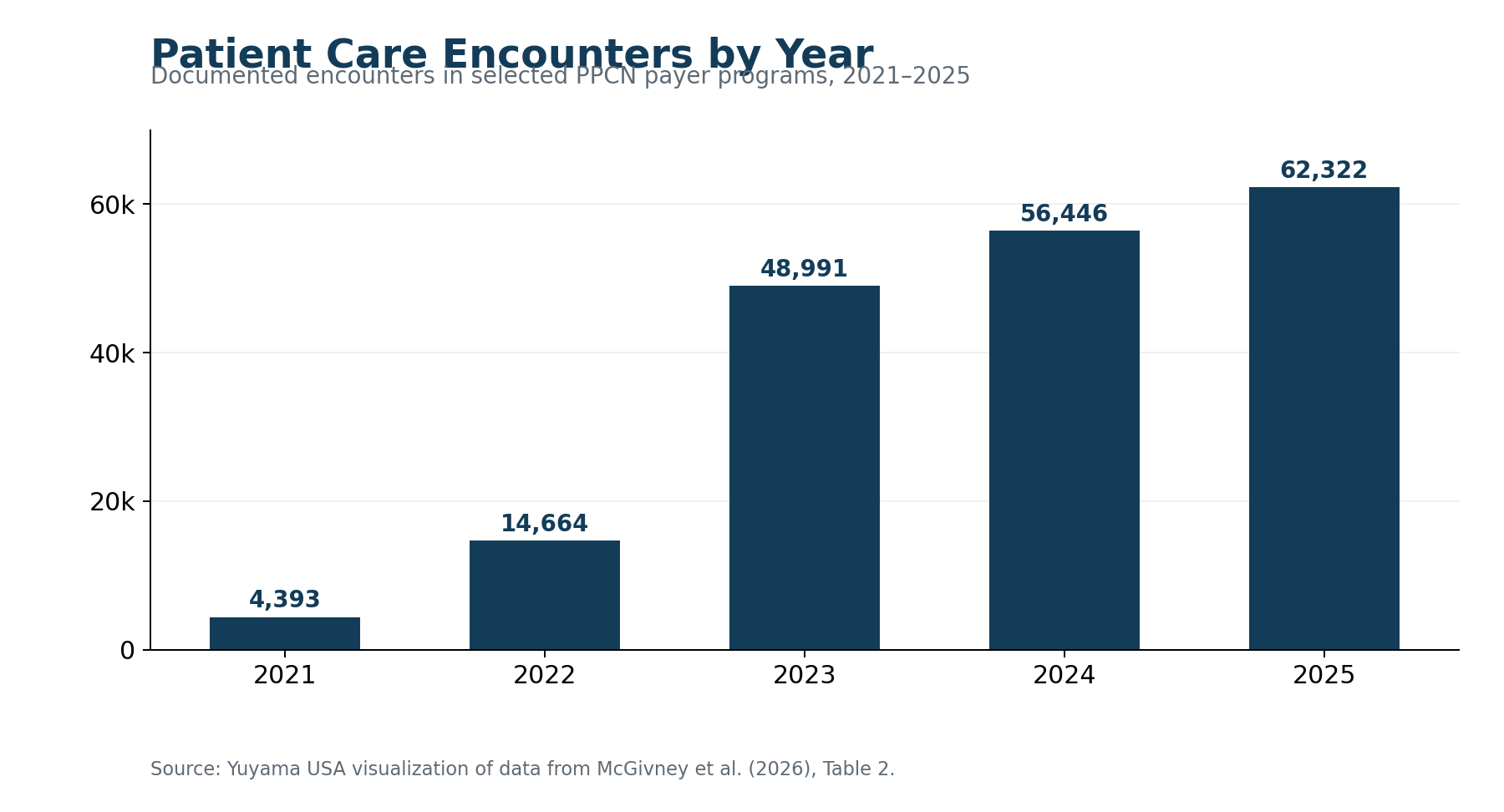
Figure 1. Patient care encounters by year, 2021–2025.
Source: Chart independently created by Yuyama USA using data reported in McGivney et al. (2026), Table 2. Note: The chart covers the selected payer programs with detailed electronic care-plan data and does not represent all PPCN activity. For authoritative definitions, methods, and interpretation, consult the original publication.
The study also details the range of services provided. Medication synchronization accounted for 59,898 documented services, home delivery for 52,107, and adherence packaging for 24,170 during 2021–2025. These figures reflect reimbursable services documented in the evaluated programs; they should not be interpreted as distinct patients or as evidence that any particular service improved adherence.
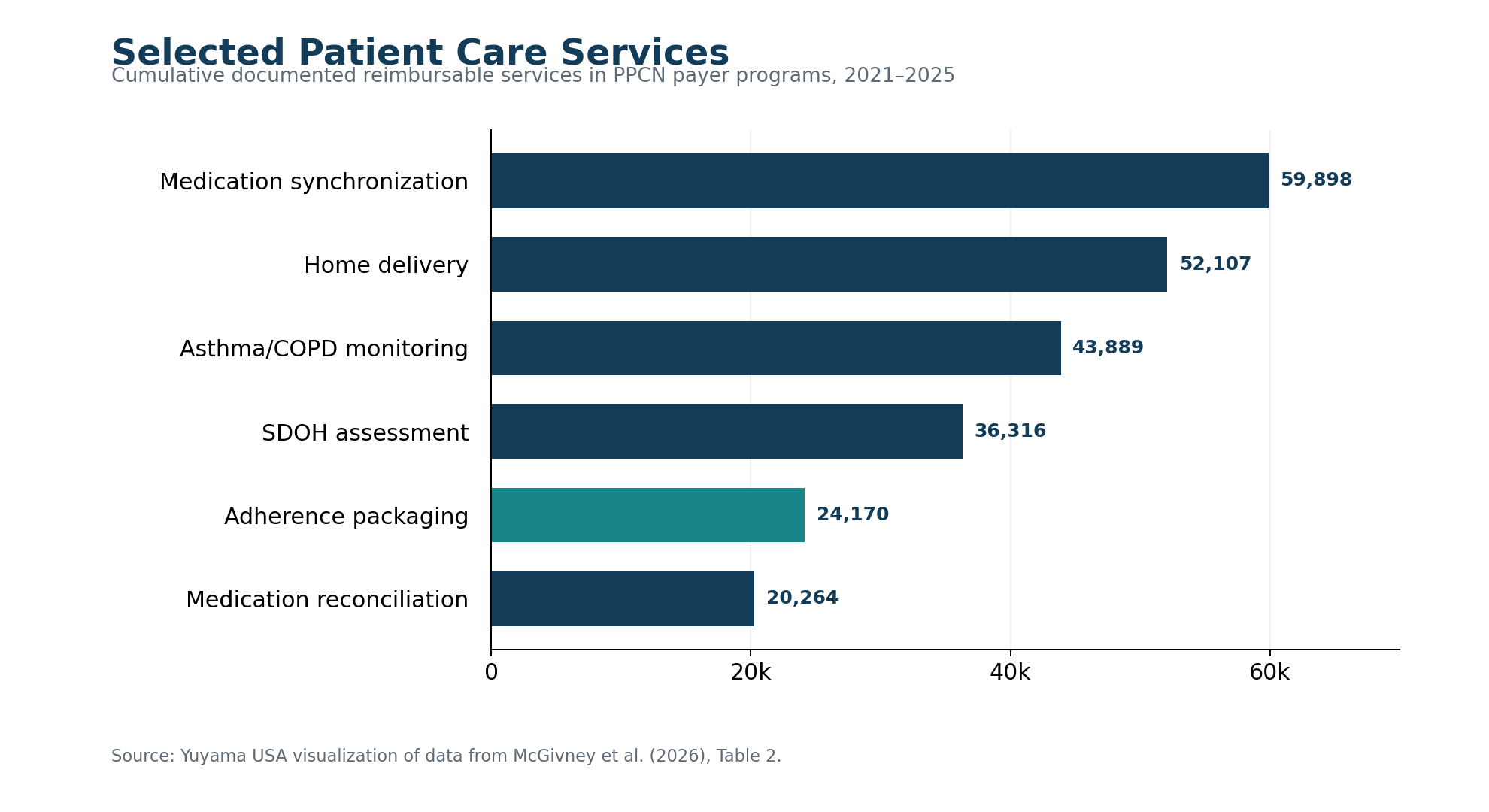
Figure 2. Selected reimbursable patient care service categories, 2021–2025.
Source: Chart independently created by Yuyama USA using data reported in McGivney et al. (2026), Table 2. Note: Only selected categories are shown; numbers are cumulative documented service counts, not unique patient counts. For authoritative definitions, methods, and interpretation, consult the original publication.
What Can Other Community Pharmacies Learn?
The authors conclude that partnerships, shared training, standardized documentation, continuous performance review, and payment arrangements are critical to developing and sustaining pharmacist-provided patient care programs. The network provides an example of how independent and other community pharmacies can collectively engage payers while maintaining consistent service expectations.
Importantly, this was a descriptive evaluation of network growth and documented service delivery. It did not establish that the programs improved clinical outcomes, increased pharmacy profits, or that a particular dispensing or packaging technology generated the reported results. Its contribution is a practical account of how a regional network organized and expanded reimbursable patient care.
Reference
McGivney MS, Hake K, Salvati S, Coley KC, Leon N, McGrath S. Development of a clinically integrated pharmacy network: Pennsylvania pharmacists care network. J Am Pharm Assoc (2003). 2026. doi:10.1016/j.japh.2026.103544.
Could Automation Help Create More Time for Patient Care?
Explore vial-filling and medication packaging solutions that may help streamline repetitive dispensing tasks so your pharmacy team can focus on patients.