Today's Featured Research
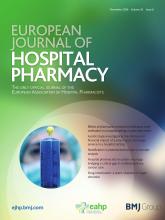
Could medications once considered unsuitable for repackaging become candidates for automated unit-dose packaging?
A recent study published in the European Journal of Hospital Pharmacy offers encouraging evidence.
Researchers in France investigated the six-month physicochemical stability of two oral formulations of aripiprazole, a medication historically associated with repackaging concerns due to its hygroscopic properties.
The results were promising: both formulations maintained chemical stability and met the applicable pharmacopoeial requirements for physical quality throughout the six-month study.
Although some changes in tablet hardness and disintegration time were observed, these changes did not result in failure of the applicable quality tests.
The findings suggest that medications previously approached with caution may warrant reassessment when reliable stability data become available.
A New Perspective on Medication Repackaging
Automated unit-dose repackaging has become an important part of medication management in many hospital and institutional pharmacy settings.
By preparing medications in individually packaged doses, pharmacies can support standardized dispensing workflows, medication identification, and organized distribution.
One continuing challenge, however, is determining which medications are suitable for repackaging and how long they can be stored after removal from their original packaging.
Historically, some medications have been excluded from repackaging workflows because of concerns about sensitivity to environmental conditions, particularly moisture.
Aripiprazole provides an interesting example.
Although its hygroscopic properties have raised concerns, relatively little experimental evidence had been available to clarify its actual stability after repackaging.
The new study helps address this evidence gap, demonstrating the value of investigating medication performance under realistic, controlled pharmacy conditions.
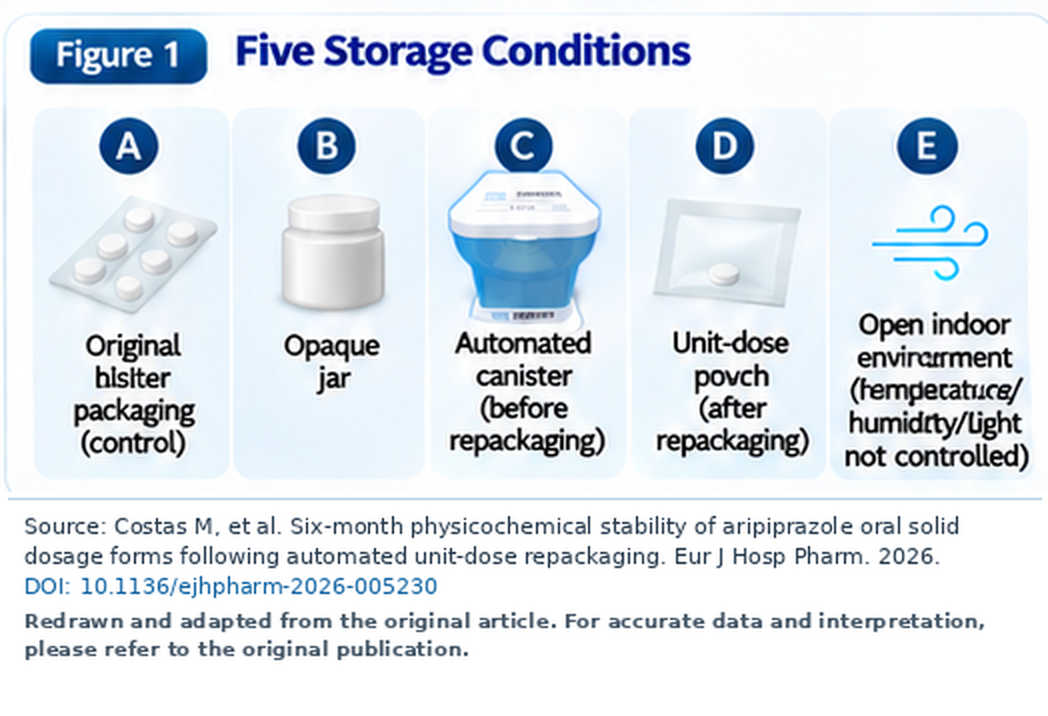
Evaluating Stability Under Different Storage Conditions
• Orally disintegrating tablets (ODT)
• Opaque containers
• Automated dispensing canisters
• Unit-dose pouches
• Open-air indoor exposure
The formulations were assessed over six months, with evaluations at 1, 3, and 6 months.
The study examined chemical integrity alongside physical characteristics such as appearance, tablet hardness, friability, and disintegration.
This comprehensive approach provides a more meaningful understanding of medication stability than assessing active ingredient content alone.
Encouraging Results: Chemical Stability Maintained for Six Months
One of the most significant findings was that aripiprazole content remained stable throughout the study.
Across all evaluated storage conditions and timepoints, no statistically significant reduction in active ingredient content was observed.
Measured values remained within the predefined acceptance range of 90–110% relative to the original blister-packaged reference.
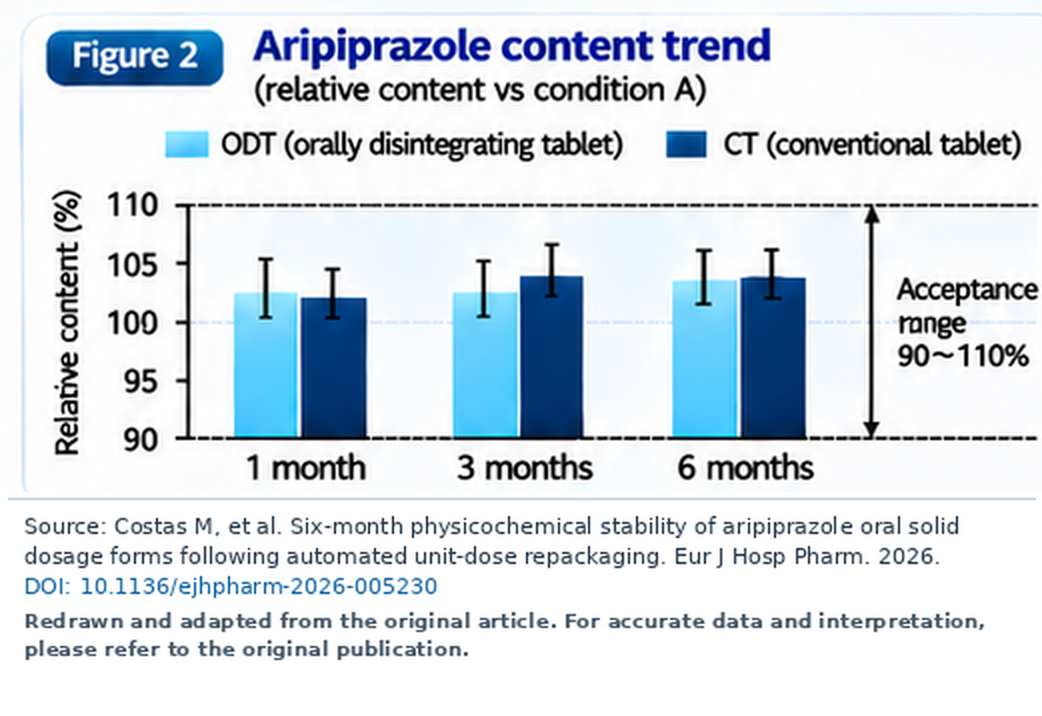
Importantly, the study demonstrated that removing the investigated formulations from their original packaging did not necessarily compromise their chemical integrity under the conditions evaluated.
For pharmacy professionals, this is an encouraging finding.
It illustrates how experimental stability data can help move repackaging decisions beyond generalized precautions and toward evidence-based evaluations of specific formulations.
Physical Changes Without Compromising Applicable Quality Standards
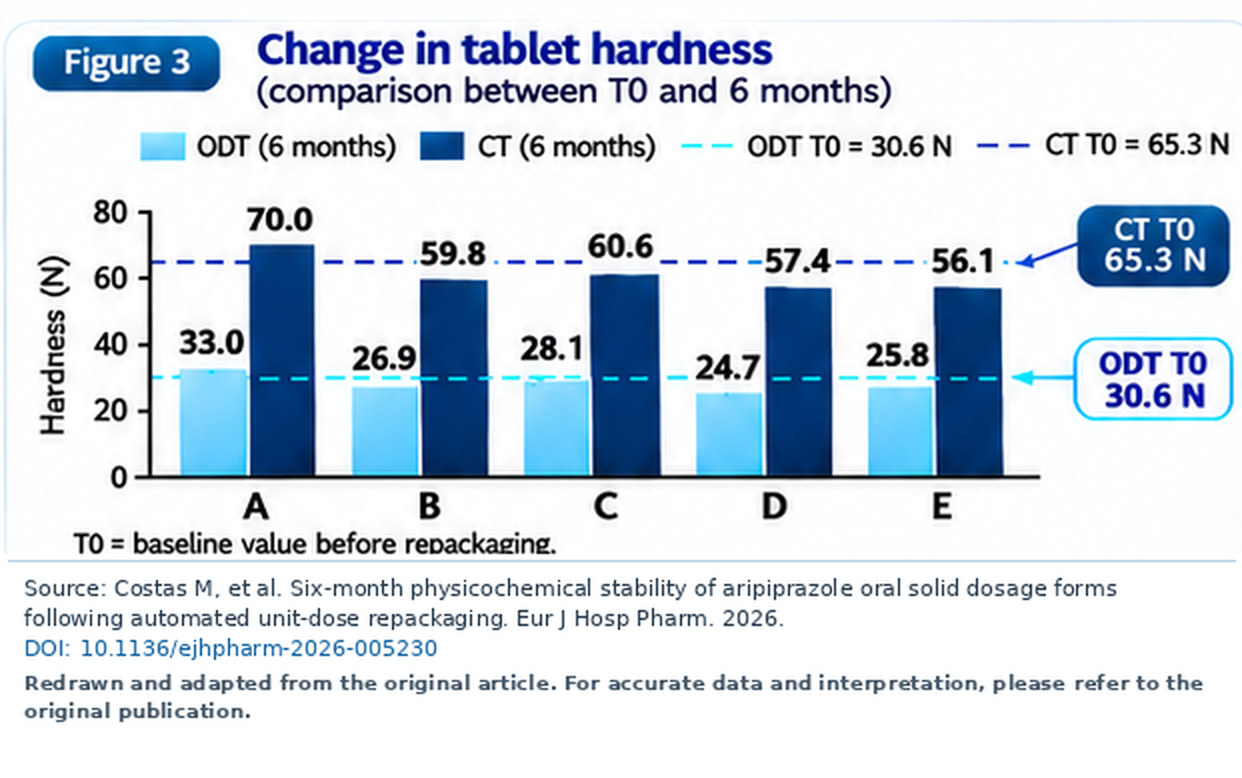
The study also examined whether repackaging affected the physical properties of the tablets.
Some reductions in tablet hardness and changes in disintegration time were observed during storage.
However, these changes did not result in failure of the applicable pharmacopoeial requirements.
All tested samples met the relevant friability and disintegration criteria throughout the six-month observation period.
This is an important distinction.
A measurable physical change does not necessarily mean that a medication has become unsuitable for use.
The significance of a change must be interpreted in the context of applicable pharmaceutical quality requirements.
In this study, chemical stability was maintained while the observed physical changes remained compatible with the tested pharmacopoeial criteria.
Together, these results provide additional evidence supporting the feasibility of repackaging the studied formulations under controlled conditions.
What Does This Mean for Automated Pharmacy Operations?
While the study focused on two specific formulations, its broader implications are relevant to pharmacy automation.
1. Stability data can help expand repackaging opportunities
Medications previously considered unsuitable for repackaging may deserve reevaluation as new scientific evidence emerges.
This does not mean that every medication can be repackaged safely. Rather, drug-specific stability studies can help identify circumstances in which repackaging may be appropriate.
Over time, a stronger evidence base may support more informed and flexible decisions about medications included in automated packaging workflows.
2. Controlled environments support reliable medication handling
The study highlights the importance of environmental conditions in medication stability.
Temperature, humidity, packaging characteristics, and storage duration all contribute to the conditions under which a repackaged medication is maintained.
For pharmacies developing automated dispensing operations, understanding and managing these variables is an important part of designing reliable medication-handling processes.
The research demonstrates that physicochemical stability can be maintained under defined hospital storage conditions, even for formulations previously associated with repackaging concerns.
3. Evidence-based beyond-use dates support operational planning
An appropriate beyond-use date (BUD) is an essential part of medication repackaging.
Rather than relying solely on generalized assumptions, pharmacies can use relevant stability data, together with applicable regulatory guidance, to support BUD decisions.
A stronger scientific foundation for these decisions may help pharmacy teams develop workflows that balance medication quality, operational efficiency, and practical inventory management.
4. Scientific research can support the continued development of pharmacy automation
Automated medication packaging continues to evolve alongside advances in pharmaceutical technology and medication safety practices.
However, equipment capabilities are only one part of successful implementation.
Understanding the characteristics of the medications being handled is equally important.
Research such as this helps bridge pharmaceutical science and pharmacy operations, providing information that may support the responsible development of automated medication management.
Interpreting the Results in Context
The findings are encouraging, but their applicability remains specific to the formulations and conditions studied.
Only one commercial batch of each formulation was evaluated. Most samples were stored under controlled temperature and humidity conditions, and the study did not directly measure humidity inside individual packaging systems.
The findings should therefore not be automatically extended to other formulations, medications, or substantially different storage environments.
In addition, the study assessed physicochemical properties rather than patient-level clinical outcomes.
These considerations help define where the evidence is most applicable and where further research would be valuable.
They also highlight opportunities for future studies involving additional medications, formulations, packaging systems, and environmental conditions.
Looking Ahead: Evidence Can Open New Possibilities
The central message of this research is encouraging.
Two aripiprazole formulations that had historically raised concerns about repackaging maintained their chemical stability and met applicable physical quality requirements throughout a six-month investigation.
The study illustrates how scientific evidence can help reassess established medication-handling precautions and support more informed repackaging decisions.
As research continues to expand our understanding of medication stability, pharmacies may gain greater confidence in evaluating which medications can be incorporated into automated unit-dose workflows and under what conditions.
The future of medication repackaging is not simply about automation. It is about combining automation with pharmaceutical science to enable safe, efficient, and evidence-based pharmacy operations.
Reference
Costas M, Maillot H, Boidin C, et al.
Six-month physicochemical stability of aripiprazole oral solid dosage forms following automated unit-dose repackaging.
European Journal of Hospital Pharmacy. Published online October 20, 2026.
DOI: https://doi.org/10.1136/ejhpharm-2026-005230
Figures accompanying this article have been recreated or adapted using information from the original publication. For accurate and complete data, methodology, and interpretation, please refer to the original article.
This article is provided for educational and informational purposes. Yuyama U.S.A., Inc. was not involved in the study. The findings do not constitute validation of any YUYAMA equipment or a general recommendation to repackage aripiprazole. Pharmacy professionals should follow applicable regulations, professional guidance, and institution-specific policies.
What Challenges Is Your Pharmacy Facing?
As pharmacy operations evolve, new opportunities and challenges continue to emerge in medication packaging, workflow efficiency, and automation.
At Yuyama U.S.A., Inc., we believe that understanding the challenges pharmacies face is the first step toward finding practical solutions.
Have a question or an operational challenge you’d like to discuss?
Let’s explore the possibilities together.